Category

Reviews

Category

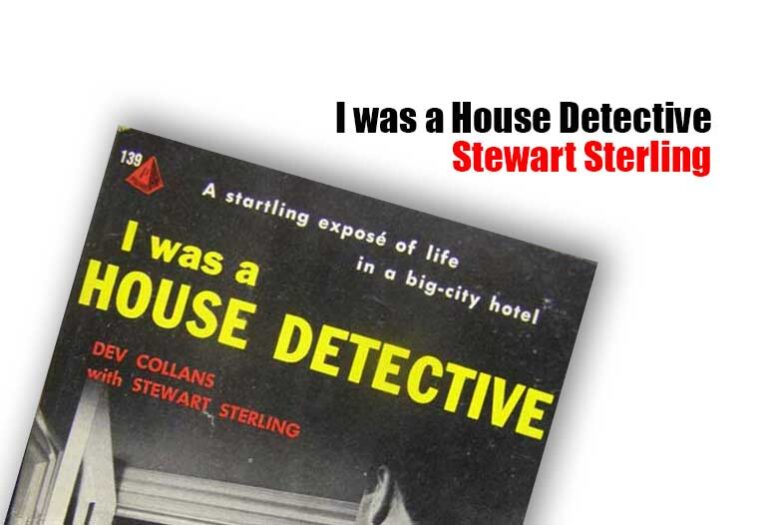
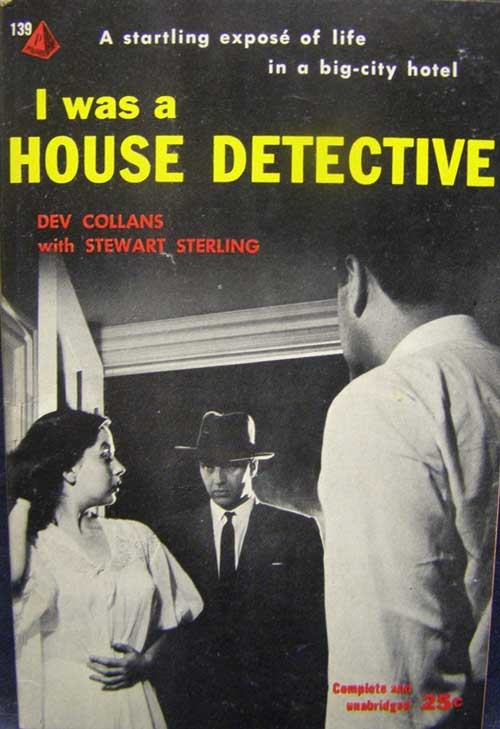
I was a House Detective by Stewart SterlingWho actually wrote this book? The lead author, Dev Collans, was a name made up to protect the identity of the house dick who was active at the time the book was written. “Collans” provided all the content to the writer, Stewart Sterling, who actually wrote it. In fact, Stuart Sterling is also a pseudonym—for Prentice Winchell (1895–1976), a prolific pulpster who was one of the original “Black Mask Boys,” and wrote dozens and dozens of short crime stories. He wrote several series characters including nine novels with Don Cadee, a department store dick.

I suspected the promise of a house detective would be more exciting than the reality, and that turned out to be the case. In fiction, the house dick is typically one step ahead of law enforcement and perennially involved in the most dangerous and titillating crimes like murder, extortion, or human trafficking. A real house officer deals with crimes like robbery, vandalism, unauthorized pets, prostitution, disturbance, and more rarely suicide. Collans worked at several hotels in the New York City area. At least one was 8-stories,  housing something on the order of 1000 rooms. These were major operations and employed an astonishing number of staff to keep the places running. Many of the onsite accoutrements like salons, bars, groceries, newsstands, etc. were actually contract services not directly staffed by hotel personnel.

“it would be well within the range of possibility for a baby to be born in an up-to-date, big-city hotel, and—assuming the building wasn’t torn down to make way for a bigger one—grow up, get married (and maybe become a parent) without ever leaving the premises. Just about anything a person might need can be found in, or easily brought to, a metropolitan hotel. Everything, that is, except a cemetery.”

The house dick had relatively little authority. He had to play things smart and rely more on insistence and polite assertion than direct intervention. He often gained entry into a suspect’s room on a claimed electrical or plumbing problem that required immediate attention. His milieu was low-tech, circa 1957. All the rooms were keyed with physical keys. His trump card was a master key which could not only open any door in the building, but it could also lock them so that the room key would no longer work. This was useful for leverage for freeloaders who refused to pay their bills. If they wanted their possessions, they’d need to settle up before they’d be let back into their room to collect their belongings.

The book is well-written, edifying, and moves along fast enough to hold your interest. I’d rank it 3 out of 5 simply because it just couldn’t live up to the magic the words “house detective” evoke in fiction. As an engaging, fact-filled report on the state of the art in the late 1950s, it probably deserves a five.

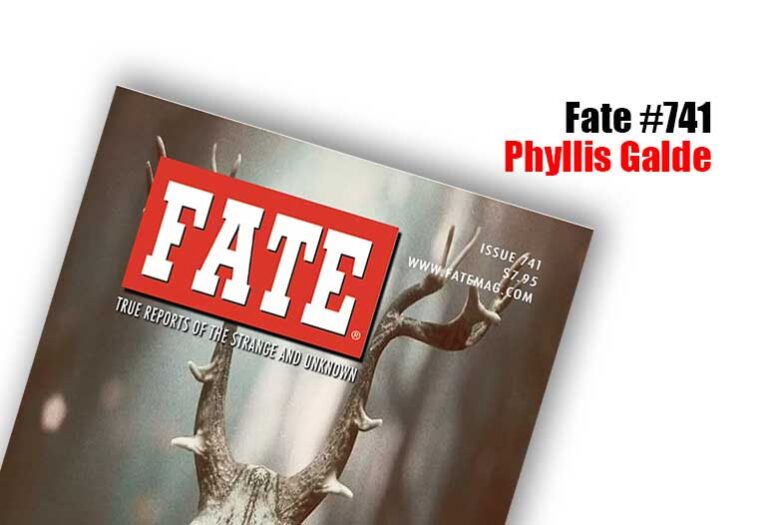
Fate Magazine No.741A wide range of reports on the strange and unknown are included in the current issue of Fate Magazine. This is typical, and this issue delivers as promised. My favorites were the cover story on skinwalkers and the article on their cousins, the bearwalkers, of the Ojibwe. I also enjoyed Rick Botelho’s “UFOs—A Realistic Assessment” perhaps the longest article ever to appear in the magazine; and George Schwimmer, Ph.D.’s “Earthbound Spirits are Attached to You.” These pieces had the most appeal for me, but there are plenty of other topics explored.

Unless you dwell in a large metropolis you may have trouble locating a copy. Best to subscribe. If you don’t like your magazines arriving with a mailing label attached, Fate offers premium subscriptions so your issues arrive in an envelope.

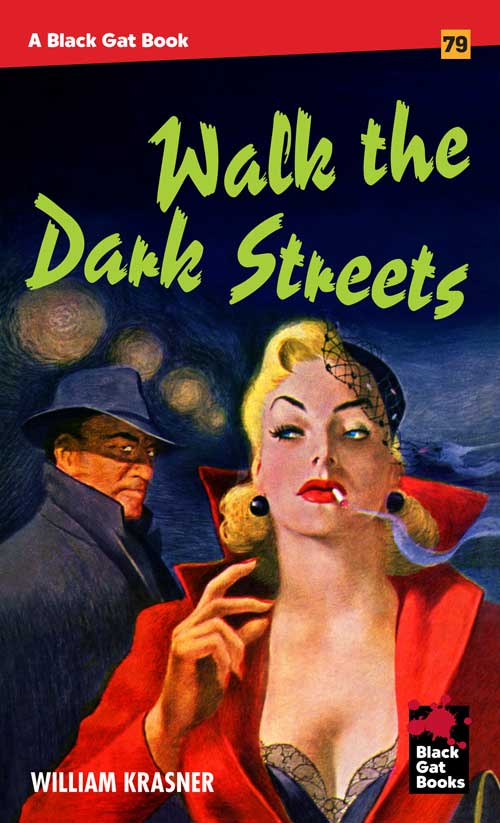
BG79: Walk the Dark Streets by William KrasnerJoe Marco looks more like a jockey than a gangster. He role-plays a law-abiding club owner, but Detective Captain Sam Birge can see beneath the veneer. Marco is careful to cover his tracks, but Birge recognizes the hood’s hidden ventures encourage exactly the sort of crimes that the detective faces every day. This time, it’s the murder of one of the Club Trinidad’s hostesses—stage named Janice Morel. Knifed in her twin-size at the fleabag Marne while comatose from a night inscribed with cheap liquor.

Birge and his partner, Charley Hagen are opposites. Birge is older, wiser, and measured. Hagen is young, ambitious, and overly aggressive. Birge is a likable character, while Hagen is more the stereotypical tough cop who beats out a confession to speed up a conviction. That’s where Harry Chapel comes in, a low-life with baggage; and intimate of Ms. Morel. Initially, Chapel is merely a person of interest, but Hagen’s threatening accusations transform him into suspect number one when he flees the scene immediately following his browbeating.

Noir excellence, rife in character depth and engaging prose, this Edgar-nominated first novel by Krasner (1917–2003), was originally published in 1949. Detective Birge would go on to appear in four additional novels, although one saw print only in Germany.

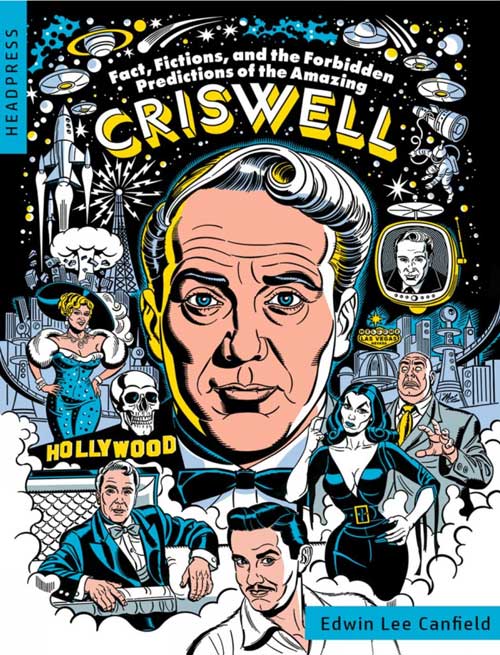
Fact, Fictions, and the Forbidden Predictions of the Amazing Criswell by Edwin Lee CanfieldFact, Fictions, and the Forbidden Predictions of the Amazing Criswell by Edwin Lee Canfield

The life and times of showman prognosticator Jeron Criswell revealed through friends, appearances, and ample predictions. His public demanded a metric on the accuracy of his torrent of forecasts, so he responded with 87%, a predictable fabrication emphatically stated as fact. No matter, he knew accuracy was not the point. His decades of prophecies were entertainment—enthusiastic, creative, often shocking, and remarkably, nearly endless. (Only occasionally true.)

Author Canfield has given us the closest look we’re likely to get into the life of an American original. Exhaustively researched, with fascinating side trips into the lives of his estranged wife, Halo Meadows,  friends, and associates, Criswell presents an in-depth examination of the prognosticator’s lifelong pursuit of the limelight. His rise from publishing limited edition pamphlets to his move to Los Angeles, from his eventually widely distributed “Criswell Predicts” newspaper column to his numerous appearances on the talkshow circuit (Jack Parr, Johnny Carson, Merv Griffin, etc.), to his slow decline as his cashflow trickled downward. It includes details on his association with Ed Wood and his entourage, both behind the scenes and in front of the camera.

A must-read for fans of cult heroics with noirish tendencies.

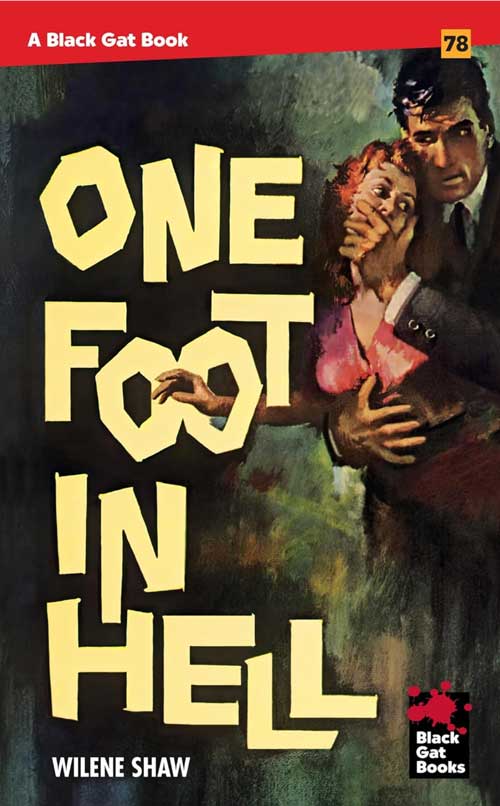
BG78: One Foot in Hell by Wilene ShawThe fact that Larry Crenshaw is a successful accountant, model husband, and a solid citizen of his native burg, fictitious Hadsville, Kentucky, located on the banks of the Ohio River, belies his reliability as a narrator. He juggles a few quirks, but generally hides his massive psychological dysfunction pretty well. He successfully deludes himself as he denudes nearly every female he encounters—her age notwithstanding. Readers witness the slow boil of his undoing as his alternate reality rises into a deadly hallucination of sanity.

Crenshaw is obsessed with sex, and it becomes obvious as pages accumulate that it’s the driving force of his existence; even if he can’t seem to recognize this fatalistic fact himself. His psychosis grew out of a brutal childhood past, fed by early promiscuity-interruptus and a tragic marriage, Crenshaw spirals into a sex-starved, booze-infused frenzy that leads to one crippling consequence after another.

Originally published by Ace in 1961 under Virginia M. Harrison’s pseudonym, Wilene Shaw. Although it was written long after the jazz age, its kilter would seem to fit comfortably within Stark House’s Staccato Crime series. Stark House previously published Shaw’s Heat Lightning in their first collection of Ace paperbacks: Three Aces (May 2023)

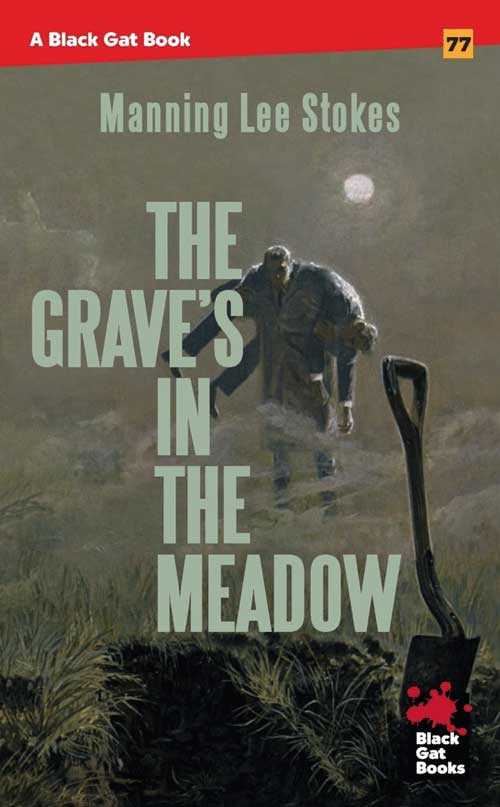
The Grave’s in the MeadowImagine writing three novels a year for 30 years. When Stokes launched his impressive bibliography in 1946 with the publication of The Wolf Howls “Murder” he went on to write 87 more before his death in 1976. Of course, sometimes, like in 1967 his credits include a staggering nine titles, but if you take his active years 29 (he died in early January, so we won’t count 1976), and divide by 88, it comes out to three books a year. Many were written under pseudonyms, and this Black Gat edition includes a four-page bibliography of Stokes’ storied career.

The Grave’s in the Meadow originally came out in 1959 from Arcadia House and was reprinted by Dell two years later. (The cover on this BG edition reprints the one from Dell.) The novel opens moments after Richard (Dick) Ludwell witnesses the murder of Kid Gonzales an up-and-coming middleweight who refused to take a dive in his last fight for the benefit of mobster Al Alonzo. The Kid paid dearly and Ludwell, who can identify the shooter Tuffy Sikes, knows he must disappear or face erasure by Sikes. Ludwell’s childhood chum is about his only trusted friend and has an ideal hideout buried in some tiny burg 100 miles from his troubles in Lake City.

Ludwell’s getaway is fast and smooth, and upon arrival in his new home he immediately begins to leverage every lucrative opportunity he can exploit. But nearby Shadeland is already packed with its own raft of savvy operators, and Ludwell is soon entwined in the local power plays. The novel is packed with unexpected twists and plenty of action as Ludwell sprints headlong from one hot mess to the next. It’s a mind-bender!

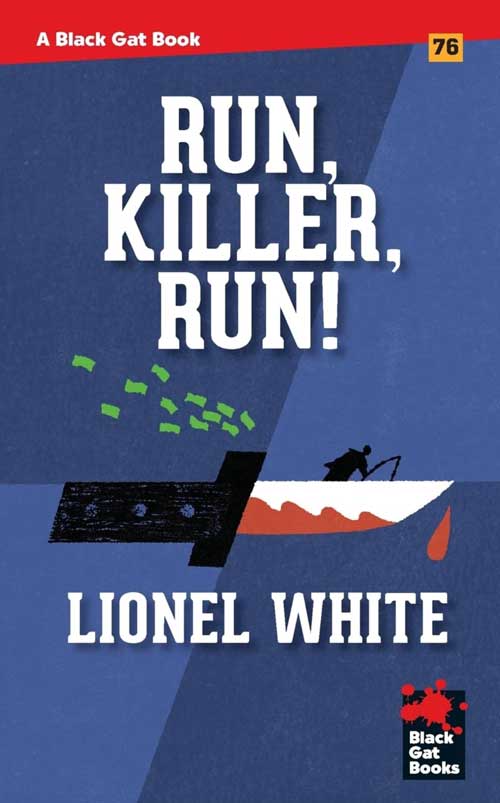
Run, Killer, Run by Lionel WhiteLionel White (1905–1985) leveraged his real-world experiences as a police reporter and true crime magazine editor when he turned to writing crime fiction. This novel was originally released as Seven Hungry Men in 1952 by Rainbow Books. White reworked things for its 1959 edition as Run, Killer, Run for Avon. Both titles are appropriate. Indeed, the caper masterminded by crime financier Mordecai Borgman, assembles seven hungry men to pull an armored car robbery, led by Rand Coleman, whom Borgman helped finagle for an early release. Coleman ain’t swayed by the favor, but when Borgman presents his latest venture along with Coleman’s cut, the ex-con agrees to lead the misfit crew onto easy street.

A couple of guys Coleman picks himself. He knows they’ll do what he says and do it well. The rest of the gang are less than optimal, but he’s forced to accept them because the clock is ticking. His doubts are confirmed and re-confirmed as the robbery unfurls and bodies fold. Coleman ain’t the one who did the killing, but with his record and the heat the hijack triggers, the revised title fits like a tight angora on a stacked twenty-something personal assistant. And that’s an apt description of Pam, Borgman’s new squeeze who likes life on the edge and loves complicating every situation she thrusts herself into.

The action and errs never stop as Coleman and his dubious partners in crime bolt from one bare escape to the next. The novel would make a terrific crime film, and in fact, Kubrick’s The Killing was adapted by White’s Clean Break, written in 1955.

Kudos to Stark House for bringing back the mystery via their Black Gat Books imprint!

BG75: The Red Tassel by David DodgeDavid Dodge wrote a lot of books. Three with international PI Al Colby. This was the third and final of the series. Like Dodge, Colby traveled the world and The Red Tassel takes him to Bolivia in service of Pancha Porter. A beautiful young woman with flaming red hair who inherited a lead mine in the mountains, managed by the man her father hired, Braillard. The mine has suffered numerous thefts and sabotages and there is some reason to suspect Porter will not be welcome by the perpetrator(s). Hence, the need for Colby. Whether he’s there to act as a bodyguard for Porter or as an undercover investigator is between him and his boss.

Colby is no mining expert, but the more he learns, the less impressive Braillard’s management savvy appears. The story and tension build steadily while Dodge immerses readers in the country’s culture and mining operations at high altitudes. Llamas are the only pack animals useful in the thin air. Unlike cattle, they cannot tolerate branding. Instead, they’re marked with tassels, woven from yarn, affixed to their ears. Each herd is marked by a different color and design.

Colby is a plodding investigator, but he’s often the smartest person in the room, and he eventually fits the meager pieces of evidence he uncovers into a plausible theory. The supernatural element in the story is cast by Yatiri the old brujo who seems to control everything that happens in his nearby village and perhaps all the trouble in the mine as well. If only Colby could figure out the connection and the motive.

The Red Tassel is a fine novel by the author of To Catch a Thief. Randel S. Brandt adds a fascinating biographical sketch of Dodge, placing the Tassel in its chronology of the author’s works. It’s a gasp!

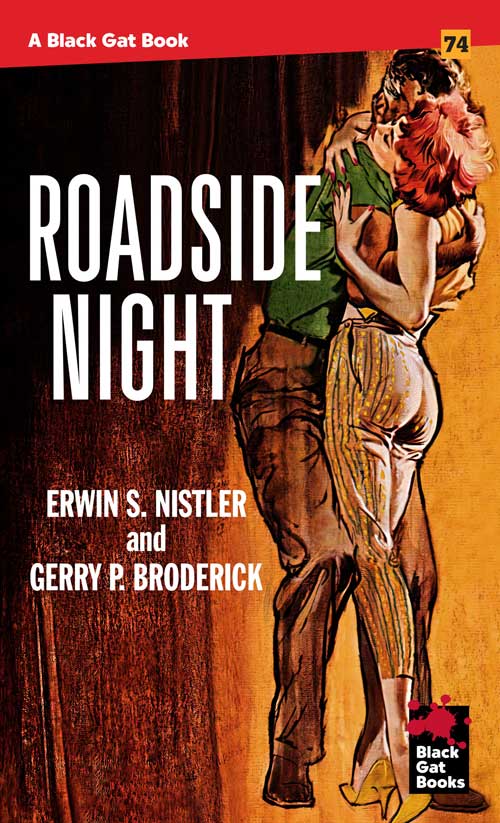
BG74: Roadside Night by Erwin S. Nistler & Gerry P. BroderickBuck Randall is a relatively nice guy. He owns a bar and a few cabins. He’s making a little money, with plans to make some more. There’s a nice girl nearby that adores him and doesn’t hide her feelings. Joyce is a little younger, a little greener than Buck, but she’s grown up right and she’s easy on the eyes. Her Daddy likes Buck too, and could be a real asset for the young man’s plans.

Maybe Buck’s military stint had him seeing and doing things that buckled his psyche just a little too sharply. When he catches his first glimpse of Sylvia Landon, things turn noir.

Sylvia is a knockout. She’s whip-smart, and she’s got big plans for Buck. In-between sheet sessions she slowly uncovers those plans. She’s got the perfect robbery lined up, and Buck’s just the man to make it happen.

Over the middle fast-paced pages of this short novel, while Buck follows her lead, he also begins to learn all about his lover’s past. It’s not good, and he can’t help but wonder what it portends for him.

Nistler and Broderick wrangle elements of classic noir, taking them in surprising directions; driving hard toward an unexpectedly deadly climax.

BG73: The Joy Wheel by Paul W. FairmanA beautifully metered coming of rage story. Eddie Kiley is on the cusp of manhood, flirting with vice, sex, and moonshine in old Chicago. His role model is his father, a successful salesman who travels frequently and hasn’t always been around to provide guidance to the teen. His mother is devout, a barricade that keeps the family’s skeleton closet shuttered to keep the uglies at bay. Like most older sisters, Eddie’s is further ahead in maturity and overall savvy than her years might attest.

An excellent character study, this fascinating story carefully unravels each person’s flaws over the course of their lives during Eddie’s most critical formative years. The most obvious is his Uncle Frank, who fights a losing battle with moon, stumbling from one self-inflicted crisis to the next. The novel is categorized as a crime book; it certainly skirts the borderline. It could also be cast as noir, but even there it defies expectations. In the end, what matters is Fairman has crafted a beguiling glimpse into the inner lives of one depression-era Chi-town patriarchy with all its heart and hedonism.

Paul Warren Fairman (1909–1977) was the founding editor of the If digest, and also served for a time as editor for Ellery Queen Mystery Magazine, Amazing Stories, and Fantastic. He wrote a raft of short stories and novels across multiple genres under his own name and several pseudonyms. Several movies and television episodes were based on his stories.