Archive

July 2018

Browsing

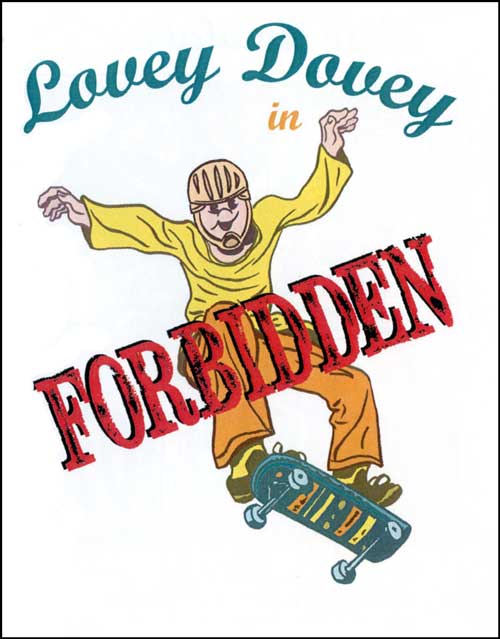
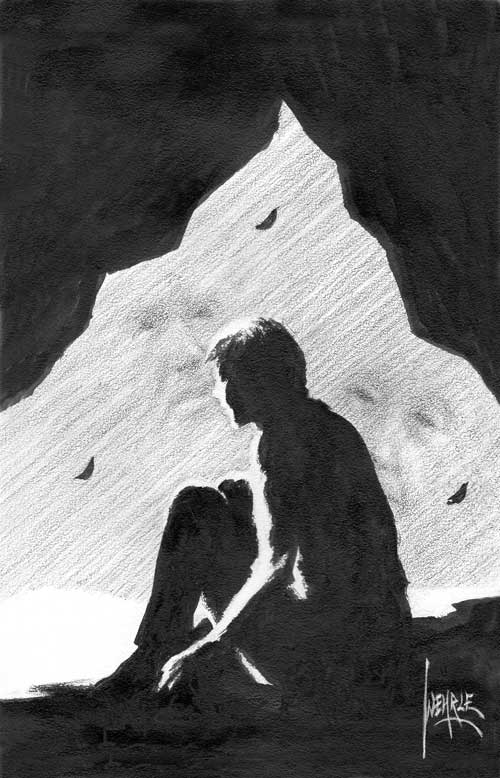
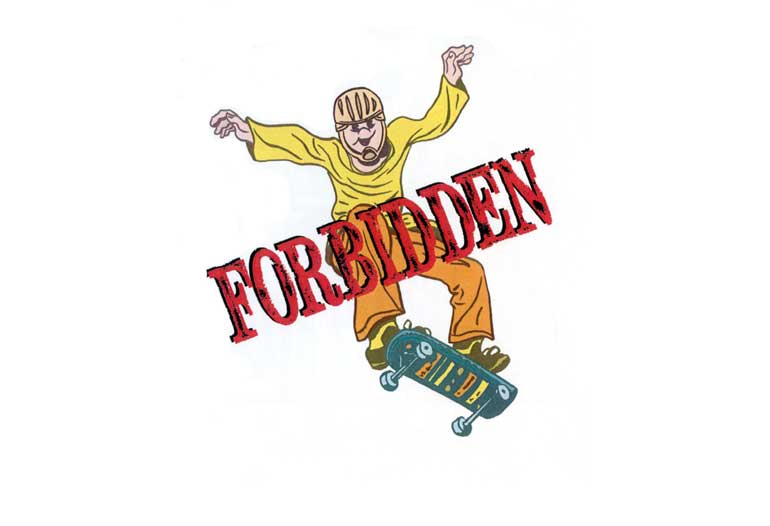
ForbiddenCartoonist/illustrator Michael Neno’s Lovey Dovey is back in a new mini comic where he encounters one road block after another to his normally lovey-dovey ways. Find out how he handles the stress and strain of this nightmare in Forbidden!

Browse over to the NenoWorld minicomics page for ordering info.

Forbidden back cover

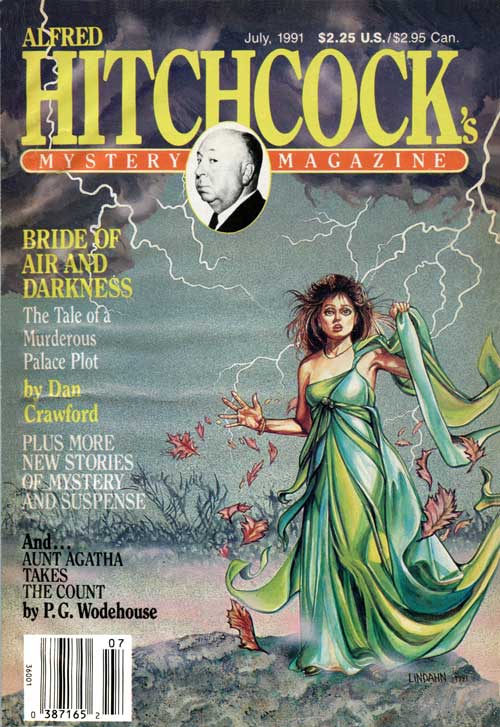
AHMM July 1991
AHMM July 1991 with B.K. Stevens’ “Final Jeopardy” Cover by Val Lakey Lindahn

An excerpt from B.K. Stevens’ interview from The Digest Enthusiast book six. Here she discusses her process, working out a plot, and weaving a list of suspects together.

It probably won’t come as a big surprise when I say my writing process varies significantly from story to story. Once in a while—and I wish it happened more often—I’ll get an idea for a story, devote only a little time to planning, plunge into the story, and write it straight through. Usually, the process isn’t nearly that simple and delightful. Usually, when I get an idea for a story—and it’s sometimes only a title, sometimes a murder method or a character or a plot twist—I write it down in a computer file titled “Notebook.” Ideas often languish there for years or decades—dozens still languish and will doubtlessly never go further. But sometimes I eventually think of a way to make the idea work, or I look through the notebook for inspiration, run across an idea I’d forgotten about, and see new potential in it.

When I decide I definitely want to try to turn an idea into a story, I sit down at the computer and start taking notes about it, using a method I called “focused freewriting” when I taught English: I stay focused on the story but write down virtually anything that comes to mind about it, from plot possibilities to bits of description to thoughts about theme. Sometimes, I’ll put together a list of major incidents in the plot; occasionally, I’ve used a variation on the “beat sheet” Blake Snyder recommends in Save the Cat; often, I don’t come up with anything that formal or orderly. For one recent story, I took a page and a half of notes; for another, I took forty- seven pages of single-spaced notes before finding the key to making the story work. (The second story was a whodunit—I have to take far more notes for whodunits than for other sorts of mysteries.) When I feel I have a clear idea of the story’s direction, I start writing the first scene.

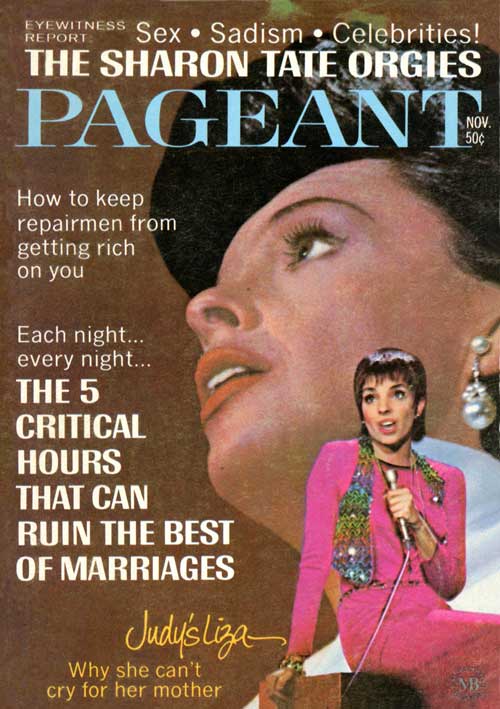
Pageant Nov. 1969Excerpt from Tom Brinkmann’s article, “Sharon Tate’s Fate,” from The Digest Enthusiast book six:

“Pageant premiered with its November 1944 issue and was originally published by Hillman Periodicals. Macfadden bought it in 1961 and continued publishing it until its final February 1977 issue.

“The misleading cover blurb on this November 1969 Pageant read, ‘Eyewitness Report: Sex • Sadism • Celebrities! The Sharon Tate Orgies.'”

Tom Brinkmann writes about unusual, off-the-beaten-path magazines, digests, and tabloids. His Bad Mags website was active from June 2004–July 2017. His books, Bad Mags Volume 1 (2008) and Volume 2 (2009) are available from secondary outlets, including amazon.com

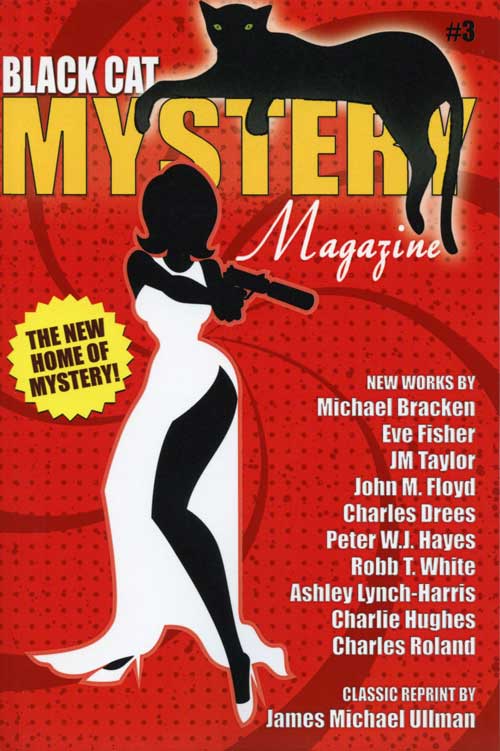
Black Cat Mystery Magazine No. 3Contents
John Gregory Betancourt and Carla Coupe: From the Cat’s Perch
Michael Bracken “Suburbia”
Eve Fisher “The Sorority House”
J.M. Taylor “Tourist Season”
John M. Floyd “Diversions”
Charlie Drees “The List”
Peter W. J. Hayes “Something Certain”
Robb T. White “The Moment of Righting”
Ashley Lynch-Harris “Beyond a Reasonable Doubt”
Charlie Hughes “The Target”
Charles Roland “Whale Watch”
James Michael Ullman “Road Hog” (Classic Reprint from EQMM Nov. 1957)

Black Cat Mystery Magazine No. 3 Summer 2018
Publisher: Wildside Press LLC
Editors: John Gregory Betancourt and Carla Coupe
Cover: Malchev/Fotolia
6” x 9” 124 pages
POD $10.00 Kindle (coming soon)
Wildside Press website

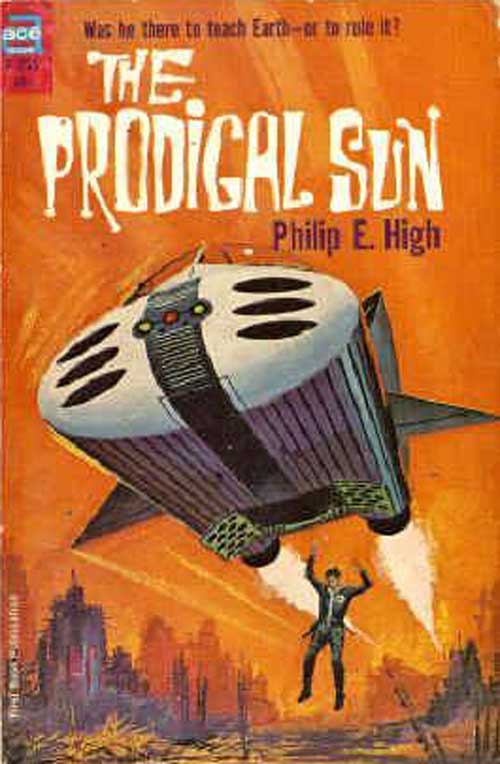
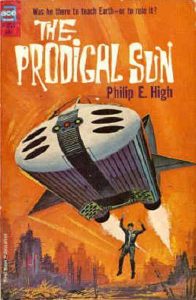
The Prodigal Sun by Philip E. HighFrom International Science Fiction No. 1 (Nov. 1967):

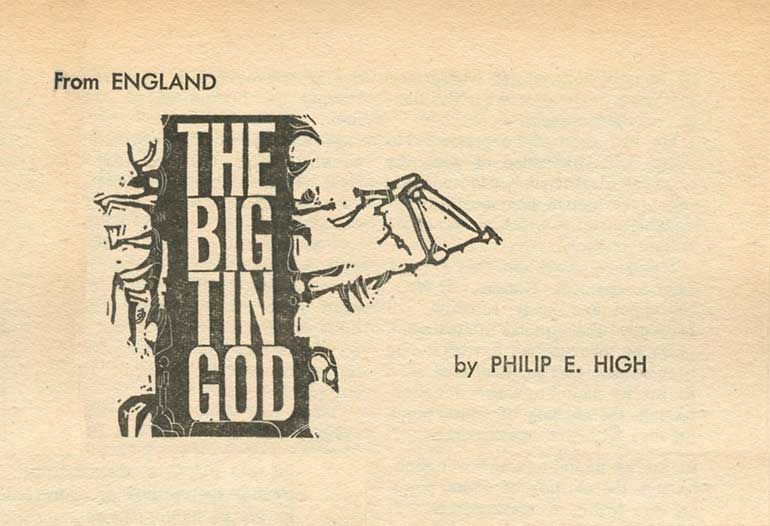
The closing tale of ISF #1 is from England. “The Big Tin God” by Philip E. High was originally published in New Worlds Science Fiction (January 1963). The prevailing authoritarian government is about to be replaced by the product of an underground network of scientists building a monumental “brain” dubbed Dopey. The only certainty is the end of the old regime.

Philip E. High (1914–2006) became hooked on science fiction as a lad when he discovered a copy of Astounding Stories. In addition to reading everything he could find by Jules Verne and H.G.Wells he particularly admired Neville Shute. He once said of Shute, “That his style, his approach, was the one I most admired, and I hoped one day to write as well as he did.”

In 1955 he sold his first story “The Statics” to H.J. Chapbell for Authentic Science Fiction. He recalled, “I received six guineas for it. It was the biggest thrill of my life. I am quite certain I walked up the wall and across the ceiling twice.”

A bus driver in his day job, High continued to write for Nebula and New Worlds, where his stories were highly rated by readers. When the magazines’ fortunes declined High turned to novels, his first, The Prodigal Sun, was published in US in 1964. It was followed by Invader on my Back, Butterfly Planet, The Time Mercenaries, and many others.

Two collections of High’s short stories were published near the turn of the century; The Best of Philip E. High (2002) and Step To the Stars (2004).

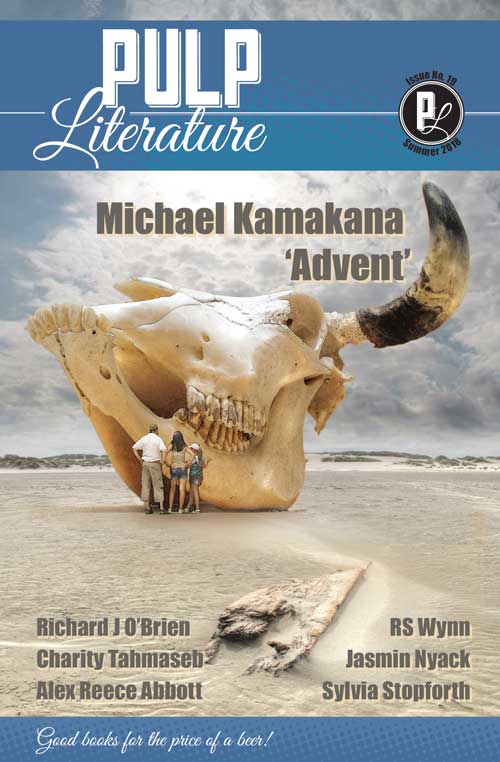
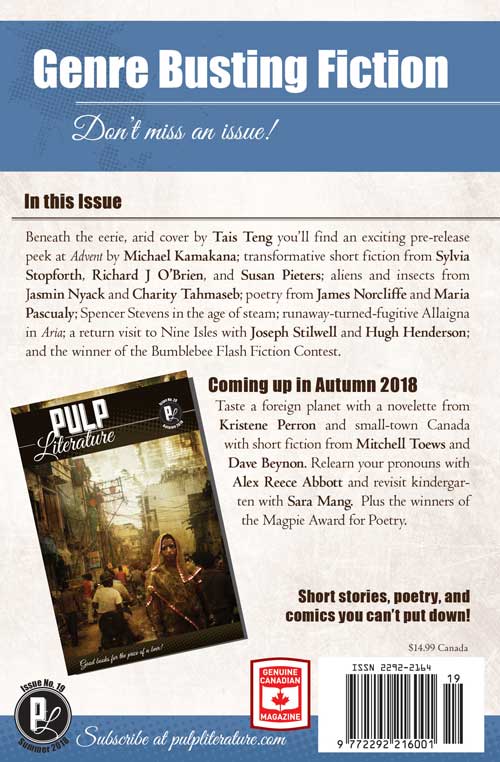
Pulp Literature No. 19Contents
From the Pulp Lit Pulpit: Advent’s Arrival
Michael Kamakana “Advent” (stand-alone excerpt from the novel)
Feature Interview: Michael Kamakana
Mel Anastasiou “The Seven Swans: The Machineries of Progress”
Maria Pascualy “First Date” (verse)
Richard J O’Brien “The Slade Transmutation”
Alex Reece Abbott “My Brother Paulie: A Domestic Space Odyssey”
Sylvia Stopforth “Ordinary”
James Norcliffe “He Had This Thing” (verse)
Susan Pieters “Guardian”
Jasmin Nyack “Five Minutes”
Charity Tahmaseb “The Potato Bug War”
Keltie Zubko “Towing the Mustang”
RS Wynn: The Bumblebee Flash Fiction Contest
Joseph Stilwell & Hugh Henderson “Blue Skies Over Nine Isles” (comic)
JM Landels “Allaigna’s Song: Aria”
The Artists (bios)
Hall of Fame (Patreon supporters)
Marketplace
Contests

Pulp Literatuer No. 19 back coverPublisher: Pulp Literature Press
Managing Editor: Jennifer Landels
Acquisitions Editor: Melanie Anastasiou
Story Editor: Sue Pieters
Assistant Editor: Jessica Fabrizius
Poetry Editor: Daniel Cowper
Copy Editor: Amanda Bidnall
Proofreader: Mary Rykov
Graphic Designer: Kris Sayer
Cover: Tais Teng
Interior artwork: Melanie Anastasiou, Jennifer Landels
5.25” x 8” 216 pages
$14.99 POD
$1.99 ebook

Pulp Literature website

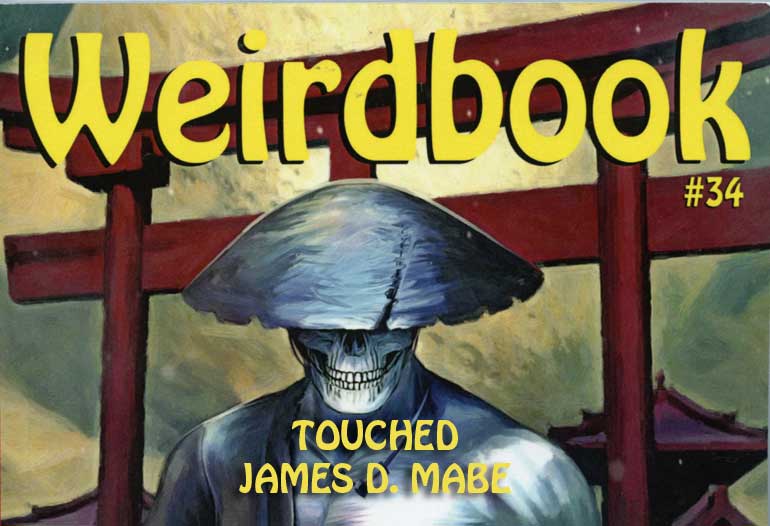
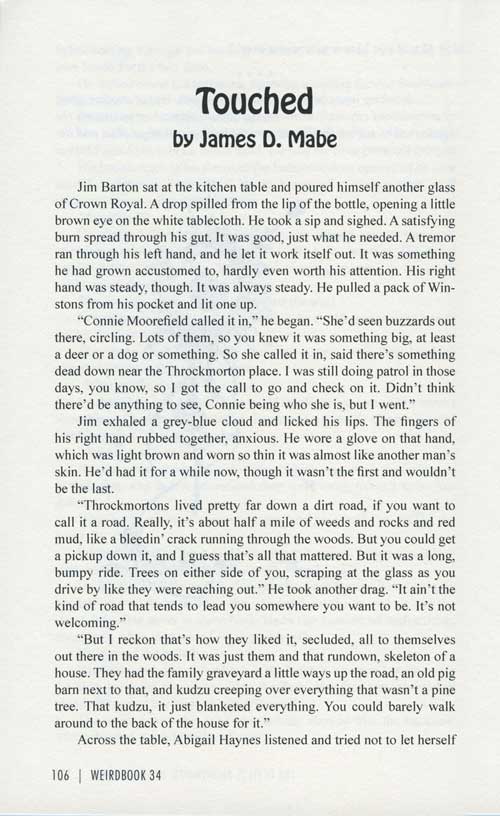
Weirdbook No. 34 page 106From Weirdbook No. 34:

You don’t have to imagine the discomfort of Abigail Haynes when lawman Jim Barton stops by her place unannounced and invites himself in for a drink, a smoke, and a little chat. James D. Mabe serves it straight up in “Touched.” Barton’s down home charm draws you in like a blue-green fly crawling up the wall on a hot summer day, at least a mile from the nearest neighbor. As he pours out his spiel poor Abigail is bound, barely able to wonder why he’s telling her about the hideous Throckmorton murder scene. Unfortunately for her, she soon learns how all the disparate pieces squirm together.

Story Title
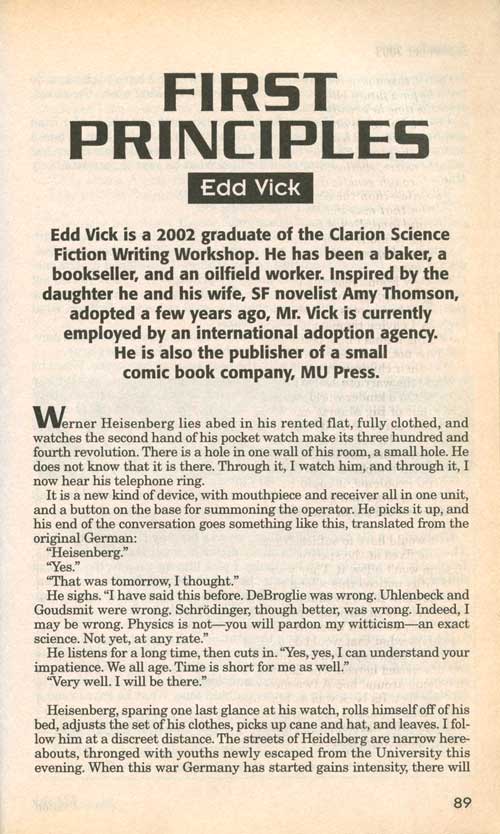
Asimov’s Sep. 2003 page 89

Below are Edd Vick’s comments on critique, from the interview conducted by D. Blake Werts, for The Digest Enthusiast book six:

“First, the more I critique other people’s work, the better I’m going to get at revising my own work. There are three levels of looking at a story. At the highest is to see it as a whole: is the idea interesting? Are the characters well chosen? Does the plot make sense? Is there a compelling theme? The middle level considers each scene: does some character change in some vital way from the beginning to the end of the scene? What is the emotional turn? How is tension ratcheted up or released? At the root level there are the individual paragraphs: is the language suited to the story? If alliteration or other clever manipulations of words are used, are they well-used? Sentence fragments? If so, appropriately used? A masterpiece is going to excel at all three levels. When I’m critiquing, I have to pay some attention to all three levels of storytelling, just as I have to when I’m writing.

“Second, critiquing is a give-and-take economy. If I don’t care enough to do a good job reviewing someone else’s story, why would they put themselves out to critique mine? Plus, I just don’t want to half-ass it; the world needs more good fiction.

“And last, giving critiques is a way of paying it forward. Writers like Joe Lansdale and Ardath Mayhar corresponded with me when I was a beginning writer, giving me useful advice. I’ve been going to science fiction conventions for decades where I can talk to great authors or attend informative panel discussions. When I critique at a con or when I appear on panels, it’s to help the next generation of writers.”